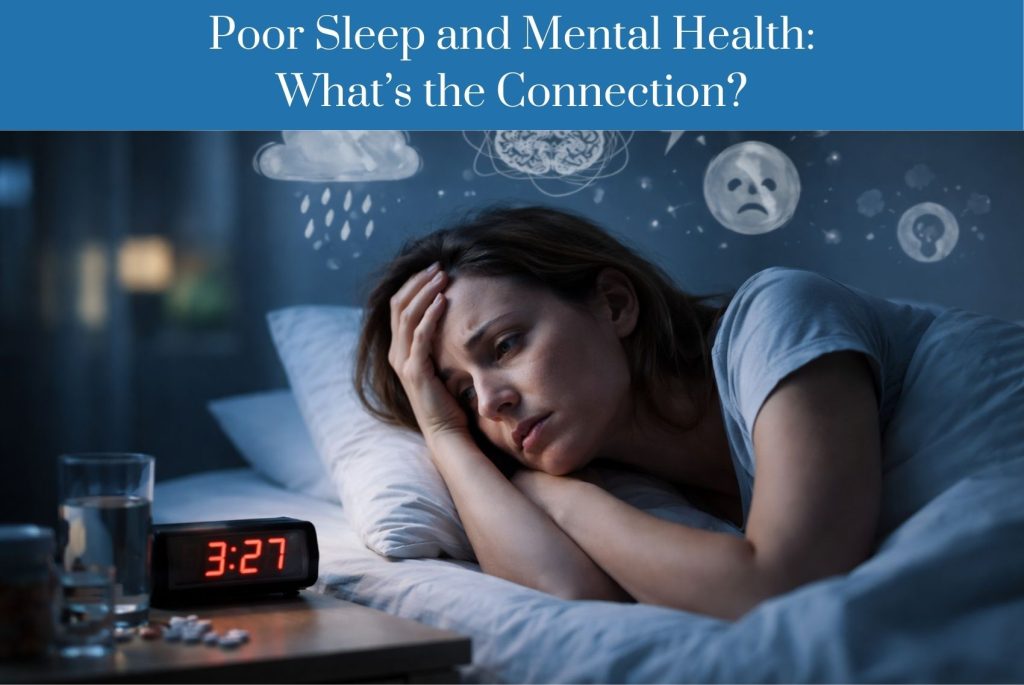
Sleep is often one of the first things to suffer when life becomes stressful, yet it is also one of the most critical foundations of both physical and mental health. Poor sleep does not just leave you feeling tired the next day—it can significantly affect your mood, focus, emotional resilience, and overall mental well-being.
Dr. Matthew Goldenberg D.O. regularly sees how sleep disturbances, mental health concerns and overall mental wellness are closely intertwined. Understanding this connection is the first step toward improving both your sleep quality and your emotional health.
How Sleep Impacts Mental Health
Sleep plays a vital role in regulating brain function, emotional processing, and stress hormones. During quality sleep, your brain consolidates memories, balances neurotransmitters, and resets emotional responses. When sleep is disrupted or insufficient, these processes are impaired.
Chronic poor sleep has been linked to:
- Increased anxiety and panic symptoms
- Depression and low mood
- Difficulty concentrating and memory problems
- Irritability and emotional reactivity
- Increased stress levels
Over time, ongoing sleep deprivation can worsen existing mental health conditions or contribute to the development of new ones.
The Two-Way Relationship Between Sleep and Mental Health
One of the most important things to understand is that the relationship between sleep and mental health is bidirectional.
- Mental health conditions can disrupt sleep: Anxiety, depression, PTSD, and stress can make it difficult to fall asleep, stay asleep, or achieve restorative rest.
- Poor sleep can worsen mental health: Insomnia and fragmented sleep can intensify symptoms of anxiety and depression, creating a self-perpetuating cycle.
Breaking this cycle often requires addressing both sleep habits and underlying mental or emotional factors.
Common Mental Health Conditions Linked to Poor Sleep
Anxiety Disorders
People with anxiety often experience racing thoughts, restlessness, and difficulty relaxing at night. This can lead to insomnia, frequent awakenings, or non-restorative sleep.
Depression
Sleep disturbances are a hallmark symptom of depression. Some individuals struggle with insomnia, while others experience excessive sleeping that still doesn’t feel refreshing.
Stress and Burnout
Chronic stress keeps the body in a heightened state of alertness, increasing cortisol levels and interfering with the body’s natural sleep-wake rhythm.
Signs That Sleep Is Affecting Your Mental Health
You may want to seek medical guidance if you notice:
- Trouble falling or staying asleep most nights
- Waking up feeling unrefreshed
- Increased anxiety or low mood tied to poor sleep
- Difficulty coping with daily stressors
- Declining focus, memory, or motivation
Early intervention can help prevent these symptoms from becoming more severe.
How Improving Sleep Can Support Better Mental Health
Improving sleep quality often leads to noticeable improvements in mood, emotional regulation, and stress tolerance. Treatment may include:
- Identifying underlying medical or psychological contributors
- Improving sleep hygiene and daily routines
- Managing stress and anxiety triggers
- Addressing co-existing mental health conditions
An individualized, holistic approach is often the most effective way to restore healthy sleep patterns.
Q&A: Poor Sleep and Mental Health
Q: Can poor sleep cause mental health problems?
A: Yes. Chronic sleep deprivation can increase the risk of anxiety, depression, and other mental health issues by disrupting brain chemistry and emotional regulation.
Q: How much sleep do adults need for mental health?
A: Most adults need 7–9 hours of quality sleep per night. Both the quantity and quality of sleep are important.
Q: Is insomnia always related to mental health?
A: Not always, but insomnia frequently coexists with anxiety, depression, stress, or other emotional conditions. A medical evaluation can help identify contributing factors.
Q: Can improving sleep reduce anxiety or depression symptoms?
A: In many cases, yes. Better sleep often improves mood, stress resilience, and emotional balance, especially when combined with appropriate medical care.
Q: When should I see a doctor about sleep problems?
A: If sleep issues persist for more than a few weeks, interfere with daily functioning, or worsen your mental health, it’s important to seek professional care.
Personalized Care for Sleep and Mental Health
Dr. Matthew Goldenberg D.O. takes a comprehensive and individualized approach to evaluating sleep concerns and their impact on mental health. By addressing the root causes—not just the symptoms—he helps patients work toward lasting improvements in both sleep quality and emotional well-being.
Dr. Goldenberg is licensed to work with patients in the states of California, Alaska, Hawaii and Utah by secure telehealth. He is NOT in-network with any insurance plans. However, Dr. Goldenberg is considered to be out of network if you have PPO insurance.
If you are interested in discussing becoming a new patient and if his practice is a good fit for your needs and goals, book a free screening phone call here.
Contact Information
Matthew Goldenberg D.O.
Santa Monica, CA 90403
📞 Phone: (424) 276-0777
🌐 Website: https://docgoldenberg.com
📅 Book An Appointment: Visit the website or call the office to schedule