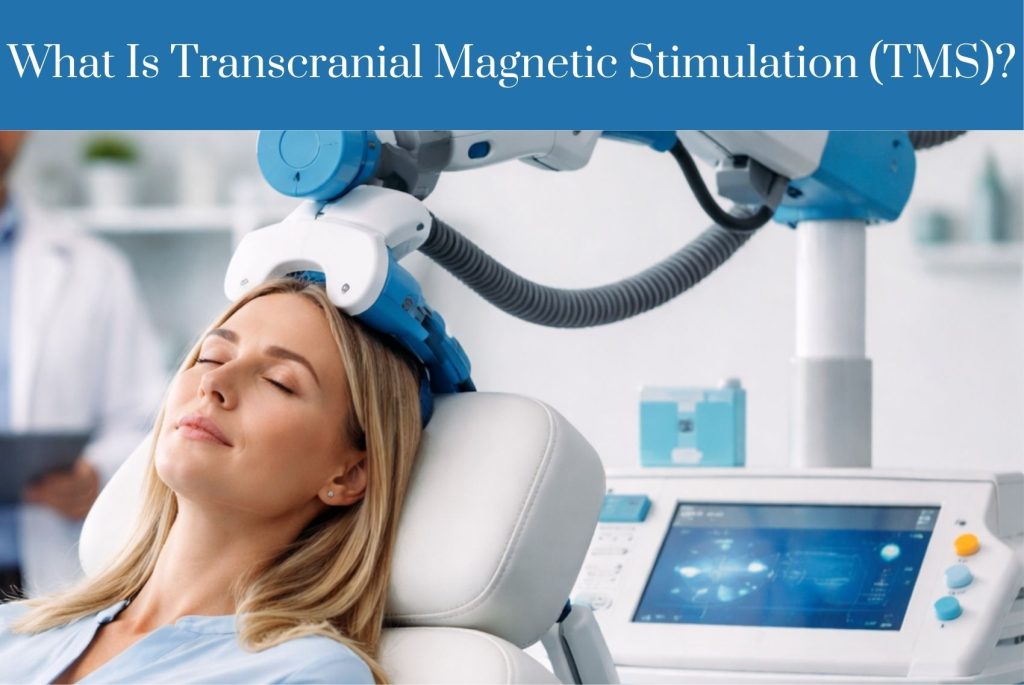
Mental health conditions such as depression can be deeply disruptive to daily life, relationships, and overall well-being. While therapy and medication help many individuals, some patients continue to struggle despite trying multiple treatment options. Transcranial Magnetic Stimulation (TMS) is an innovative, non-invasive therapy that offers new hope for people living with treatment-resistant depression and other mental health conditions.
At Matthew Goldenberg D.O., we are committed to providing evidence-based, cutting-edge psychiatric care. TMS is one of the advanced treatment options we offer to help patients regain balance, clarity, and quality of life.
Understanding Transcranial Magnetic Stimulation (TMS)
Transcranial Magnetic Stimulation (TMS) is an FDA-approved, non-invasive treatment that uses magnetic pulses to stimulate specific areas of the brain involved in mood regulation. These magnetic pulses activate underactive neurons, helping restore healthier brain activity patterns associated with depression.
Unlike medications, TMS does not involve systemic side effects such as weight gain, sexual dysfunction, or fatigue. It also does not require anesthesia or sedation, allowing patients to remain awake and return to normal activities immediately after each session.
How TMS Works
TMS targets the prefrontal cortex, an area of the brain known to play a key role in mood, motivation, and emotional control. During a treatment session:
- A specialized coil is placed gently against the scalp
- Magnetic pulses are delivered in a controlled, repetitive pattern
- These pulses stimulate neural pathways associated with depression
- Over time, brain activity becomes more balanced and functional
A typical course of TMS involves short daily sessions, usually five days a week, over several weeks.
Who Can Benefit From TMS?
TMS is most commonly recommended for individuals who:
- Have major depressive disorder (MDD)
- Have not responded adequately to antidepressant medications
- Cannot tolerate medication side effects
- Prefer a non-drug treatment approach
In some cases, TMS may also be helpful for conditions such as anxiety, obsessive-compulsive disorder (OCD), and post-traumatic stress disorder (PTSD), depending on individual evaluation and clinical appropriateness.
Benefits of TMS Therapy
Patients choose TMS for many reasons, including:
- Non-invasive and drug-free treatment
- No anesthesia or downtime
- Minimal side effects, most commonly mild scalp discomfort
- Clinically proven effectiveness
- Long-lasting symptom relief for many patients
Many individuals begin noticing improvements within the first few weeks of treatment, with benefits continuing even after therapy is completed.
What to Expect During Treatment
Each TMS session typically lasts about 20–40 minutes. Patients remain fully awake and seated comfortably. After treatment, most people return to work or daily activities right away.
Side effects are generally mild and temporary, with the most common being scalp sensitivity or mild headache during the initial sessions.
Comprehensive TMS Q&A
What does TMS feel like?
Patients often describe a tapping or clicking sensation on the scalp. It is not painful, though mild discomfort may occur early in treatment.
Is TMS safe?
Yes. TMS is FDA-approved and has been extensively studied. Serious side effects are rare when treatment is properly administered.
How long does it take to see results?
Some patients notice improvement within 2–3 weeks, while others may require a full course of treatment to experience significant benefits.
Will I need to stop my medications?
Not necessarily. Many patients continue their current medications while undergoing TMS, though treatment plans are individualized.
Is TMS covered by insurance?
Many insurance plans cover TMS for treatment-resistant depression. Our office can help verify benefits and discuss coverage options.
How long do the results last?
Many patients experience long-term relief. Some may benefit from maintenance sessions if symptoms return.
Can TMS replace therapy?
TMS is often most effective when combined with psychotherapy and comprehensive psychiatric care.
Why Choose Matthew Goldenberg D.O. for TMS?
Dr. Matthew Goldenberg is dedicated to personalized, compassionate mental health care. Our practice focuses on accurate diagnosis, individualized treatment planning, and the integration of advanced therapies like TMS to help patients achieve meaningful and lasting improvement.
Contact Information
Matthew Goldenberg D.O.
2708 Wilshire Blvd
Santa Monica, CA 90403
Phone: (424) 276-0777
Website:docgoldenberg.com
Book An Appointment: Available online or by phone