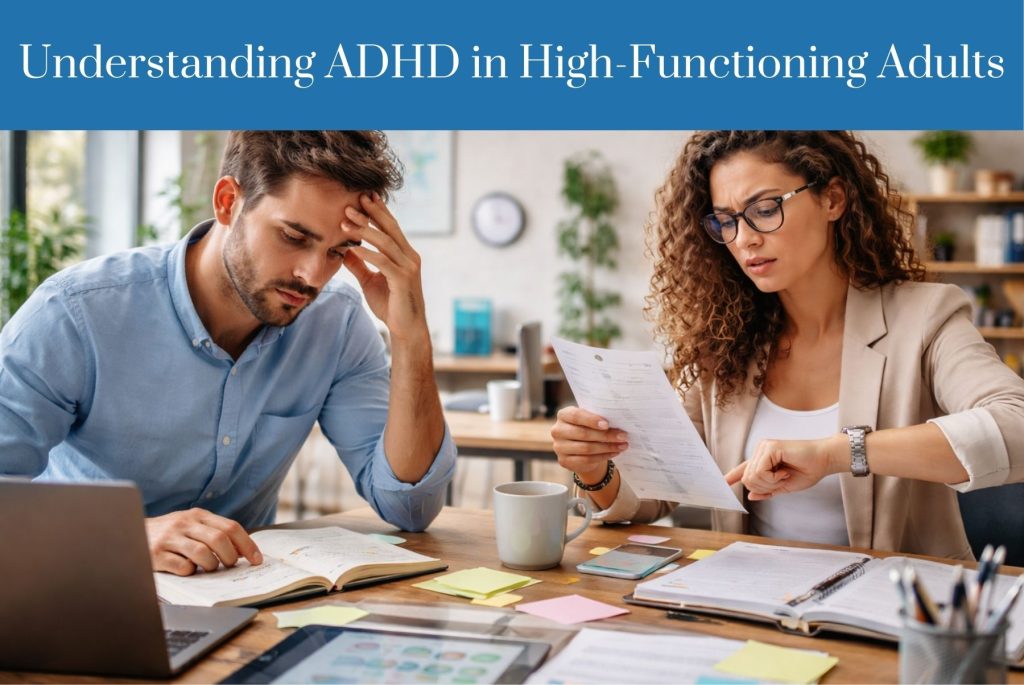
Attention-Deficit/Hyperactivity Disorder (ADHD) is often associated with childhood or academic struggles, but many adults—particularly high-functioning adults—live with ADHD without ever receiving a formal diagnosis. These individuals may appear successful in their careers and personal lives, yet still experience chronic challenges with focus, organization, emotional regulation, and mental fatigue.
Understanding how ADHD presents in high-functioning adults is the first step toward effective treatment and improved quality of life.
What Is ADHD in Adults?
ADHD is a neurodevelopmental condition that affects how the brain regulates attention, impulse control, and executive functioning. While symptoms often begin in childhood, many adults are not diagnosed until later in life—especially those who have learned to compensate through intelligence, structure, or sheer effort.
In high-functioning adults, ADHD symptoms are often internalized rather than overt, making them easier to overlook.
Common Signs of ADHD in High-Functioning Adults
High-functioning adults with ADHD may excel professionally or academically but still struggle behind the scenes. Common symptoms include:
- Chronic difficulty focusing, especially on routine or uninteresting tasks
- Procrastination despite strong motivation or ambition
- Disorganization and difficulty managing time
- Mental restlessness or racing thoughts
- Emotional sensitivity or irritability
- Trouble following through on long-term goals
- Burnout from constantly “overcompensating”
Because these individuals often perform well on the surface, their symptoms may be dismissed as stress, anxiety, or personality traits.
Why ADHD Often Goes Undiagnosed in High-Functioning Adults
Many high-achieving adults with ADHD develop coping strategies early in life, such as perfectionism, overworking, or rigid routines. While these strategies may lead to external success, they often come at the cost of:
- Chronic stress
- Anxiety or depression
- Low self-esteem
- Exhaustion or emotional burnout
Without proper evaluation, individuals may blame themselves rather than recognizing an underlying neurological condition.
The Impact of Untreated Adult ADHD
When left untreated, ADHD can significantly affect both personal and professional life, even in high-functioning individuals. Common long-term impacts include:
- Difficulty maintaining relationships
- Career stagnation or frequent job changes
- Increased risk of anxiety, depression, or substance use
- Persistent feelings of underachievement despite success
Early recognition and treatment can dramatically improve daily functioning and overall well-being.
Diagnosing ADHD in Adults
A proper adult ADHD diagnosis involves a comprehensive evaluation, which may include:
- Detailed clinical interviews
- Review of childhood and adult symptom history
- Assessment of attention, executive function, and emotional regulation
- Screening for co-occurring conditions such as anxiety or depression
An accurate diagnosis ensures that treatment is personalized and effective.
Treatment Options for High-Functioning Adults with ADHD
ADHD treatment is highly individualized and may include one or more of the following:
Medication Management
Medications can help regulate attention, focus, and impulse control by targeting neurotransmitter imbalances in the brain.
Behavioral Strategies and Coaching
Practical tools such as time management strategies, organizational systems, and goal-setting techniques can help reduce daily stress.
Lifestyle and Mental Health Support
Sleep optimization, exercise, nutrition, and therapy play a critical role in managing symptoms and preventing burnout.
Working with a qualified healthcare professional ensures that treatment addresses both symptoms and overall mental health.
Frequently Asked Questions (Q&A)
Can you have ADHD and still be successful?
Yes. Many high-functioning adults with ADHD are highly intelligent, creative, and driven. Success does not rule out ADHD—it often masks it.
How is adult ADHD different from childhood ADHD?
Adults tend to experience less physical hyperactivity and more internal symptoms, such as mental restlessness, difficulty focusing, and emotional dysregulation.
Is ADHD just anxiety or stress?
While symptoms can overlap, ADHD is a distinct neurological condition. Anxiety and stress may occur alongside ADHD, but treating ADHD directly often improves both.
At what age can ADHD be diagnosed in adults?
ADHD can be diagnosed at any age. Many individuals receive their first diagnosis in their 30s, 40s, or later.
Will treatment change my personality or creativity?
No. Proper treatment helps reduce distractions and emotional overwhelm, allowing your strengths—such as creativity and problem-solving—to shine more clearly.
Do I need medication to manage ADHD?
Not always. Some individuals benefit most from behavioral strategies or therapy, while others respond well to medication. Treatment plans are personalized.
When to Seek Professional Help
If you feel like daily life requires excessive effort, or if you’re constantly compensating just to keep up, an evaluation may provide clarity and relief. ADHD is not a personal failing—it’s a treatable condition.
Contact Information
Matthew Goldenberg D.O.
2708 Wilshire Blvd
Santa Monica, CA 90403
📞 Phone: (424) 276-0777
🌐 Website: docgoldenberg.com
📅 Book An Appointment