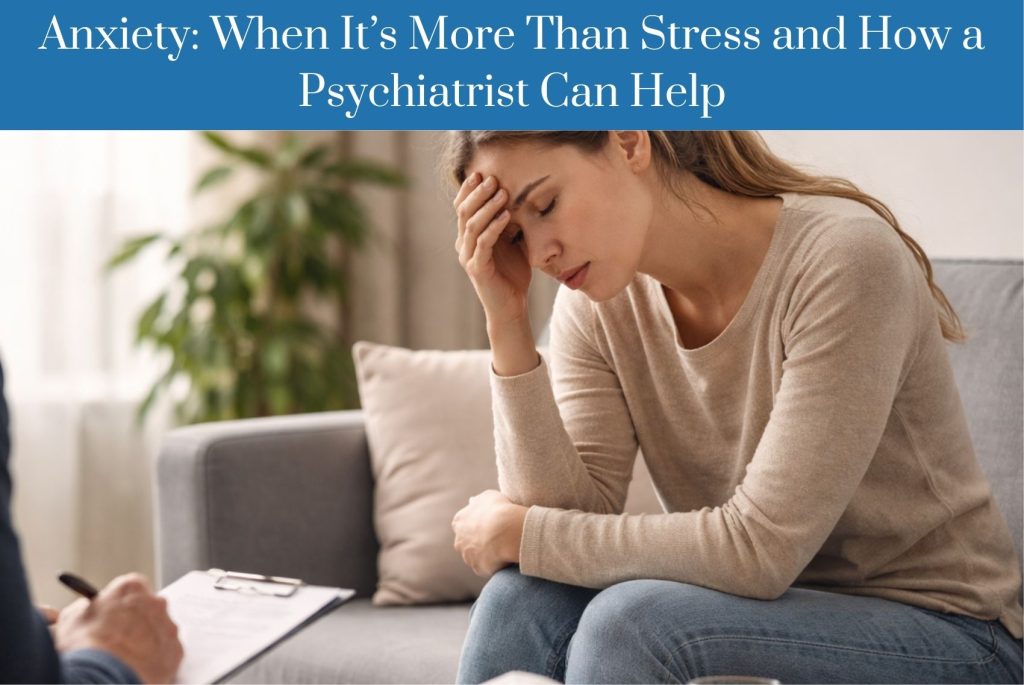
Feeling stressed from time to time is a normal part of life. Work deadlines, family responsibilities, financial pressures, and unexpected challenges can all create temporary feelings of worry or tension. However, when anxiety becomes persistent, overwhelming, or starts interfering with your daily life, it may be more than just stress.
Understanding the difference between everyday stress and an anxiety disorder is an important first step toward getting the right support. With professional care from a psychiatrist, anxiety can be effectively managed and treated, helping you regain a sense of balance and well-being.
What Is Anxiety?
Anxiety is your body’s natural response to perceived danger or stress. It can show up as nervousness, fear, or unease, often accompanied by physical symptoms such as a racing heart or muscle tension. While short-term anxiety can be helpful in certain situations, chronic or intense anxiety may signal an underlying mental health condition.
Common anxiety-related conditions include:
- Generalized Anxiety Disorder (GAD)
- Panic Disorder
- Social Anxiety Disorder
- Specific Phobias
- Anxiety related to depression or trauma
When anxiety is ongoing or disproportionate to the situation, professional evaluation is essential.
Stress vs. Anxiety: Key Differences
While stress and anxiety share similarities, there are important distinctions:
- Stress is typically linked to an external cause and often subsides once the situation resolves.
- Anxiety may persist even when there is no clear stressor and can feel difficult to control.
Signs that anxiety may be more than stress include:
- Excessive worry most days
- Difficulty concentrating
- Sleep disturbances
- Irritability or restlessness
- Physical symptoms such as headaches, nausea, or chest tightness
- Avoidance of situations due to fear or worry
How Anxiety Can Impact Daily Life
Untreated anxiety can affect nearly every area of life, including relationships, work performance, and physical health. Over time, it may lead to fatigue, burnout, depression, or increased reliance on unhealthy coping mechanisms. Early intervention can prevent symptoms from worsening and improve overall quality of life.
How a Psychiatrist Can Help
A psychiatrist is a medical doctor who specializes in mental health and understands how emotional well-being connects to physical health. Psychiatrists are uniquely qualified to diagnose anxiety disorders, rule out medical causes, and create personalized treatment plans.
Treatment for anxiety may include:
- Comprehensive psychiatric evaluation
- Medication management when appropriate
- Evidence-based therapeutic approaches
- Coordination with therapists or other healthcare providers
- Ongoing monitoring and adjustments to care
Working with a psychiatrist allows for a thoughtful, individualized approach that addresses both symptoms and underlying causes.
Comprehensive Q&A: Anxiety and Psychiatric Care
Q: How do I know if my anxiety is serious enough to seek help?
A: If anxiety is persistent, interferes with daily activities, affects sleep, or feels unmanageable, it’s a strong indication that professional support could be beneficial.
Q: Can anxiety go away on its own?
A: Mild anxiety related to temporary stress may resolve on its own. However, chronic anxiety disorders often require professional treatment to improve long-term outcomes.
Q: What happens during a psychiatric evaluation for anxiety?
A: A psychiatrist will review your symptoms, medical history, lifestyle factors, and any previous treatments. This helps determine an accurate diagnosis and the most effective treatment options.
Q: Will I need medication for anxiety?
A: Not everyone with anxiety needs medication. A psychiatrist will discuss all options and recommend medication only if it is appropriate for your specific situation.
Q: Is anxiety treatment long-term?
A: Treatment length varies. Some patients benefit from short-term care, while others may need ongoing management. The goal is always to help you function well and feel better over time.
Q: Can anxiety be related to other mental health conditions?
A: Yes. Anxiety often coexists with depression, ADHD, or trauma-related conditions. A psychiatrist can identify and address overlapping concerns.
Taking the First Step Toward Relief
Anxiety is highly treatable, and seeking help is a sign of strength—not weakness. With compassionate, professional care, it’s possible to reduce symptoms, build resilience, and regain control over your mental health.
If anxiety is affecting your life, reaching out to a qualified psychiatrist can be the turning point toward lasting relief.
Contact Information
Matthew Goldenberg D.O.
2708 Wilshire Blvd
Santa Monica, CA 90403
📞 Phone: (424) 276-0777
👉 Book An Appointment
🌐 Website:https://docgoldenberg.com