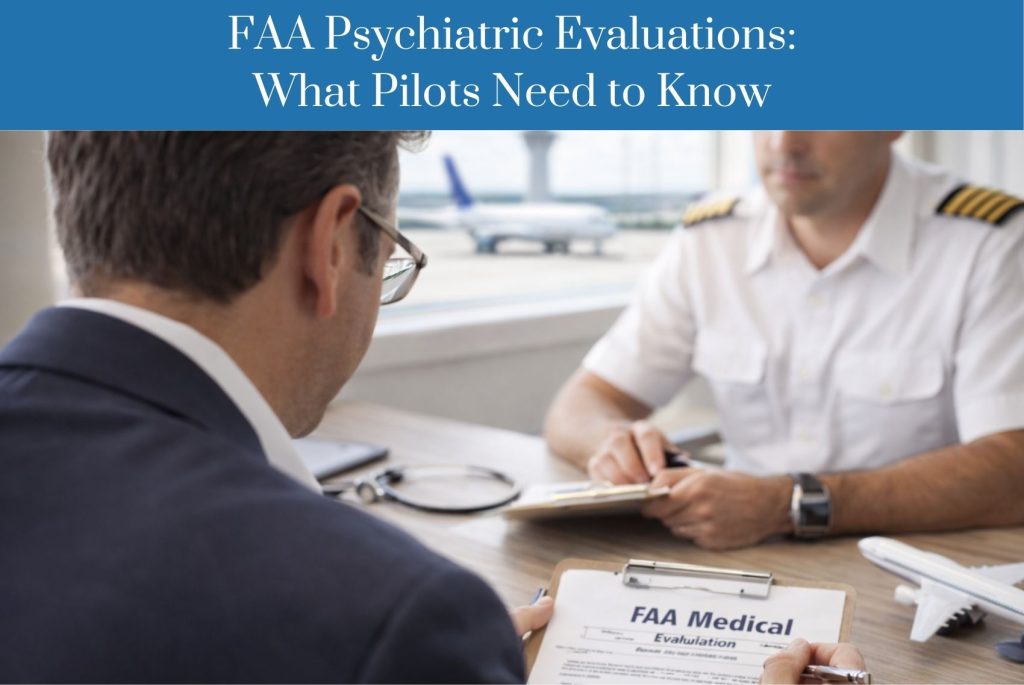
For pilots, mental health is not only a personal matter—it is also a critical component of aviation safety. The Federal Aviation Administration (FAA) has strict medical certification requirements, and psychiatric conditions are among the most closely reviewed. Understanding when an FAA psychiatric evaluation is required, what it involves, and how to prepare can make a significant difference in protecting both your career and your certification.
At Matthew Goldenberg D.O., we provide FAA-informed psychiatric evaluations designed to help pilots navigate this complex process with clarity, professionalism, and discretion.
Why the FAA Requires Psychiatric Evaluations
The FAA’s mission is to ensure the safety of pilots, passengers, and the public. Because mental health conditions can potentially affect judgment, attention, reaction time, and decision-making, the FAA evaluates psychiatric history carefully before issuing or renewing a medical certificate.
A psychiatric evaluation may be required if a pilot has:
- A history of depression, anxiety, bipolar disorder, ADHD, or other mood disorders
- Prior or current use of psychiatric medications
- A history of substance use or substance use treatment
- Reported mental health symptoms during a medical exam
- Previous FAA medical deferrals or denials
What Is an FAA Psychiatric Evaluation?
An FAA psychiatric evaluation is a detailed, structured assessment conducted by a qualified mental health professional. The goal is not simply to diagnose, but to determine whether a pilot meets the FAA’s standards for safe flight operations.
Unlike routine psychiatric visits, FAA evaluations must follow specific FAA guidelines and documentation requirements.
What the Evaluation Typically Includes
An FAA psychiatric evaluation often involves:
- A comprehensive psychiatric interview
- Review of medical, psychiatric, and treatment history
- Assessment of current symptoms and functional status
- Evaluation of medication history and side effects
- Review of work performance and flight duties
- Assessment of risk factors, such as impairment or relapse
- Preparation of a formal FAA-compliant report
Accuracy and completeness are essential, as the FAA relies heavily on the evaluator’s report when making certification decisions.
The Importance of Choosing the Right Evaluator
Not all mental health providers are familiar with FAA requirements. Working with a physician who understands aviation medicine and FAA expectations helps reduce unnecessary delays, requests for additional testing, or denials.
At Matthew Goldenberg D.O., evaluations are conducted with:
- Familiarity with FAA medical certification standards
- Clear, objective, and thorough documentation
- A focus on functional safety and stability
- Respect for pilot confidentiality and career concerns
Common Mistakes Pilots Should Avoid
Pilots often encounter issues due to:
- Incomplete disclosure of mental health history
- Seeing providers unfamiliar with FAA standards
- Submitting vague or insufficient documentation
- Delaying evaluation after an FAA deferral
- Stopping or changing medications without guidance
Proper evaluation and documentation from the start can prevent prolonged certification delays.
FAA Psychiatric Evaluations: Q&A for Pilots
Q: Does having a mental health diagnosis automatically disqualify me from flying?
A: No. Many pilots with well-managed mental health conditions hold FAA medical certificates. The FAA focuses on symptom stability, treatment effectiveness, and functional safety.
Q: Will the FAA see my entire medical record?
A: The FAA reviews the records you authorize and the evaluator’s report. Providing accurate and relevant information is essential.
Q: Can I be on psychiatric medication and still fly?
A: In some cases, yes. The FAA allows certain medications under specific conditions, often through a Special Issuance process.
Q: How long does the FAA decision process take after an evaluation?
A: Timelines vary. A thorough, well-prepared evaluation can reduce back-and-forth requests and shorten overall processing time.
Q: What happens if the FAA denies my medical certificate?
A: A denial does not always mean the end of your flying career. Appeals, additional evaluations, or future reapplication may be possible depending on the circumstances.
Q: Should I talk to my AME before scheduling a psychiatric evaluation?
A: Yes. Coordination between your Aviation Medical Examiner (AME) and psychiatric evaluator is often helpful.
Q: Is confidentiality maintained during the evaluation?
A: Yes. Information is handled professionally and shared only as required for FAA certification purposes.
How Matthew Goldenberg D.O. Can Help
Matthew Goldenberg D.O. provides FAA-focused psychiatric evaluations designed to meet regulatory requirements while supporting pilots through a stressful process. Each evaluation is conducted with attention to detail, fairness, and respect for the pilot’s professional responsibilities.
Contact Information
Matthew Goldenberg D.O.
2708 Wilshire Blvd
Santa Monica, CA 90403
📞 Phone: (424) 276-0777
🌐 Website: https://docgoldenberg.com
📅 Book An Appointment